
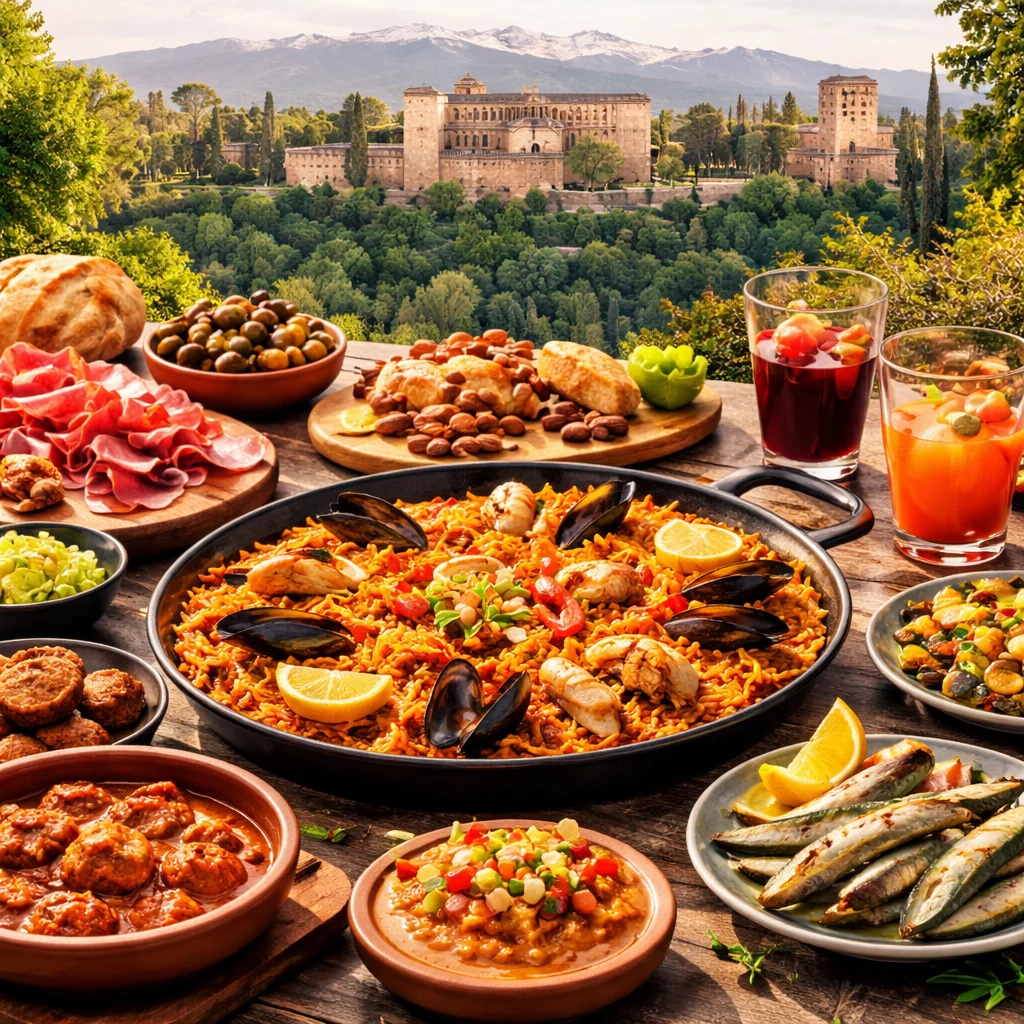
The Culinary Landscape of Granada
Granada, a city steeped in history and culture, is known not only for its stunning architecture and the Alhambra but also for its deep-rooted gastronomic traditions. Granada’s cuisine reflects a blend of Moorish, Jewish, and Christian influences that tell the story of its diverse heritage. The region’s gastronomy is characterized by the use of local ingredients sourced from its fertile Vega, the Lecrín Valley, and the Costa Tropical. This climatic diversity allows for everything from the cultivation of tropical fruits on the coast to the iconic pomegranates and oranges, which are fundamental in local recipes.
Traditional Dishes of Granada
- Tortilla del Sacromonte: This iconic dish comes from the historic gypsy neighborhood of Sacromonte. It is made with eggs, potatoes, peas, and its main feature: offal such as ram brains and testicles. This omelet showcases the resourcefulness of traditional cooking, achieving an intense, mellow flavor profile deeply rooted in local history.
- Piononos de Santa Fe: Created in 1897 by Ceferino Isla in the nearby town of Santa Fe to pay tribute to Pope Pius IX (Pío Nono), these are small sponge cakes moistened in syrup, filled with cream, and topped with toasted cream. They are the perfect end to any Granadan meal.
- Olla de San Antón: A hearty stew traditionally prepared around January 17th to celebrate the feast of San Antonio Abad. Made with dried broad beans, rice, and various parts of the pig (ear, tail, black pudding, mask), it reflects the slaughter season and the need for high-calorie dishes for the winter at the foot of the Sierra Nevada.
- Remojón Granadino: Although gazpacho is popular, Granada’s true cold ambassador is the remojón. This refreshing salad of Mozarabic origin combines peeled and chopped oranges, desalted cod, black olives, spring onions, and a generous splash of local extra virgin olive oil.
- Migas de Sémola: Unlike other regions in Spain where stale bread is used, in Granada and neighboring Almería, migas made with wheat semolina flour predominate. They are traditionally served with bacon, chorizo, garlic, fried peppers, and even melon or fried fish in coastal areas.
The Treasure of the Mountain: PGI Trevélez Ham
The Alpujarra region, on the southern slopes of the Sierra Nevada, is famous for its altitude and its cold, dry air—perfect conditions for natural curing. This is where Trevélez Ham is produced, protected by a Protected Geographical Indication (PGI). Its curing process without artificial nitrites, ranging from 14 to 24 months depending on the weight, gives it a sweet, low-salt flavor that was even recognized by Queen Isabella II in the 19th century.
Tapas Culture and Events
Granada is the undisputed tapas capital of Spain, where every drink automatically includes a generous, complimentary appetizer.
- Granada Tapas Gastronomic Competition: Organized by the Provincial Federation of Hospitality Enterprises, this annual contest brings together the best bars and restaurants in the city, competing by creating signature tapas using local products protected under the “Sabor Granada” brand.
- Corpus Christi Fair: Usually held in June, this is Granada’s main festival. At the Almanjáyar fairgrounds and in the city center, visitors can enjoy public tents where they can taste stews, fried fish, and manzanilla wine amidst flamenco and sevillanas performances.
The Hospitality of the People of Granada
The warmth of the Granadan people enriches the culinary experience. In the bustling bars of areas like the San Antón neighborhood, Calle Navas, or the Albaicín, waitstaff and venue owners proudly share the history behind each tapa. Interacting with locals at these lively counters provides an authentic glimpse into the Andalusian lifestyle.
A Culinary Experience at Sea Suite Spain
Staying at Sea Suite Spain in Almuñécar gives you a perfect base to explore both the Costa Tropical and the interior. Here, you can enjoy stunning Mediterranean views while savoring local delicacies such as mango, cherimoya, and dried octopus. The proximity to the capital (less than an hour’s drive) allows for day trips to dive into the city’s gastronomic treasures, offering guests the ideal balance between the tranquility of the sea and the vibrant life of Granada.
Granada’s culinary traditions are a living reflection of its Andalusi legacy and agricultural wealth. From mountain stews to Vega salads and coastal fish, every bite tells the story of the province. Exploring these bars, restaurants, and squares is the most authentic way to savor the essence of this enchanting land.
Bibliography and Real References