
Southern Spain is a vibrant tapestry of culture, history, and tradition, where festivals play a pivotal role in the local lifestyle. From the lively streets of Seville during the Feria de Abril to the mesmerizing bonfires of the Hogueras de San Juan in Alicante, the region is a celebration of life, color, and community. In this blog post, we will explore some of the most emblematic festivals in Southern Spain, their historical significance, and the unique experiences they offer.
Feria de Abril (April Fair) – Seville
One of the most famous festivals in Southern Spain is the Feria de Abril, held in Seville. This week-long event typically takes place two weeks after Easter, usually in late April or early May. The festival dates back to 1847 when it started as a livestock fair. Today, it has evolved into a grand celebration of Andalusian culture, drawing locals and tourists alike.
Activities and Highlights
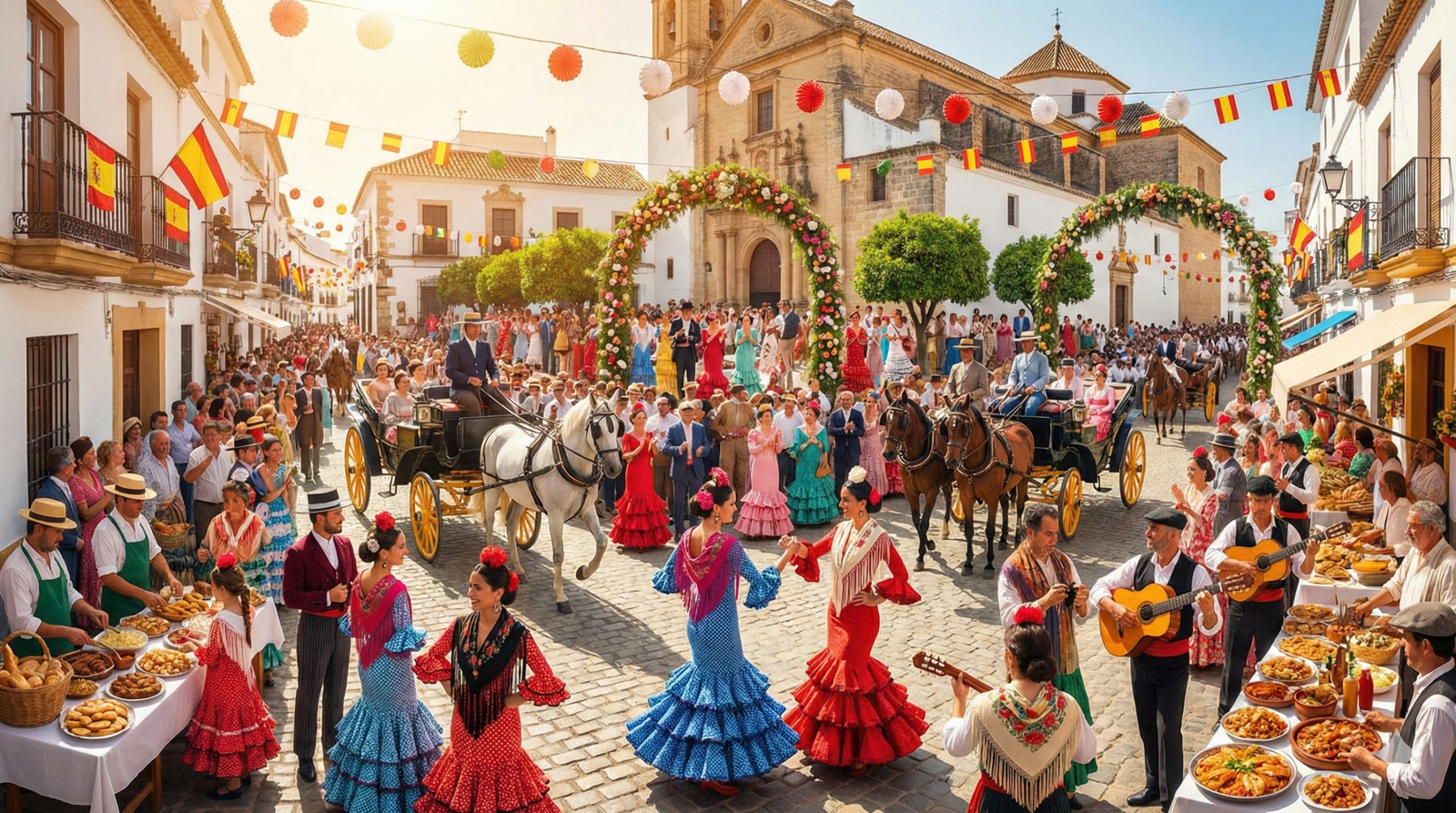
The Feria de Abril is characterized by its colorful casetas (tents), where families and friends gather to enjoy traditional food, music, and dance. One of the festival’s highlights is the flamenco performances, showcasing the passionate art form that embodies the spirit of Andalusia. Visitors can indulge in local delicacies liketortilla de patatas, jamón ibérico, and refreshingrebujito, a mix of sherry and lemonade.
The festival also features a spectacular parade of horse carriages, where elegantly dressed riders display Andalusian horses. With an average attendance of around 1.5 million people every year, the Feria de Abril is a feast for the senses and an essential part of Southern Spain’s cultural calendar.
Las Hogueras de San Juan – Alicante
Celebrated on the night of June 24th, Las Hogueras de San Juan in Alicante is a unique festival that marks the arrival of summer. This tradition is deeply rooted in ancient rituals aimed at purifying the soul and celebrating the sun’s return.
Activities and Highlights
The festivities begin with the plantà, where enormous wooden sculptures, known as hogueras, are erected throughout the city. These sculptures often depict satirical scenes and characters, reflecting current events and political issues. On the night of the festival, a grand bonfire is lit, and the hogueras are burned in a spectacular display of fire and fireworks, symbolizing the cleansing of the past.
In addition to the hogueras, the festival features live music, parades, and traditional dances. The atmosphere is electric, with locals dressed in traditional attire enjoying the vibrant celebrations. The event attracts around 1 million visitors each year, making it one of the most significant festivals in Alicante.
La Semana Santa (Holy Week) – Andalucía
Another monumental festival in Southern Spain is La Semana Santa, or Holy Week, which takes place the week leading up to Easter. This week-long observance is celebrated in various cities across Andalucía, with each region showcasing its unique traditions and processions.
Activities and Highlights
The processions are the heart of La Semana Santa, featuring religious brotherhoods parading through the streets with ornate floats, known as pasos, depicting scenes from the Passion of Christ. The city of Seville is particularly famous for its elaborate processions, with theHermandad del Gran Poder being one of the most iconic.
The atmosphere during La Semana Santa is both solemn and festive, with thousands of spectators lining the streets. Participants often dress in traditional robes, and the sound of saetas (flamenco songs) sung from balconies adds to the emotional depth of the event. In Seville alone, the festival attracts over 2 million visitors each year, making it a significant cultural event in Spain.
Feria de Málaga – Málaga
The Feria de Málaga, held in August, is another lively festival that showcases the rich culture and traditions of the region. This week-long celebration commemorates the reconquest of Málaga from the Moors in 1487.
Activities and Highlights
The festival kicks off with a grand opening ceremony, followed by a week of parades, concerts, and flamenco performances. The streets of Málaga come alive with music, laughter, and the aroma of delicious food, including pescaíto frito (fried fish) andespeto de sardinas (grilled sardines).
A distinctive feature of the Feria de Málaga is the daytime and nighttime celebrations. During the day, festivities take place in the city center, while at night, the action moves to the fairgrounds, where large tents host parties filled with dancing and live music. The festival attracts approximately 1 million visitors, making it a significant cultural highlight of the summer.
Conclusion
Southern Spain’s festivals are a testament to the region’s rich cultural heritage and the passion of its people. Each celebration, from the vibrant Feria de Abril in Seville to the fiery Hogueras de San Juan in Alicante, offers visitors an opportunity to immerse themselves in the local traditions and experience the warmth and hospitality of Andalusia. If you plan to visit the south of Spain, timing your trip to coincide with these festivals will undoubtedly enhance your experience and create lasting memories.
Bibliography and References
- Andalucía Tourism. (2023). Feria de Abril. Retrieved from Andalucía Tourism
- Alicante City Council. (2023). Las Hogueras de San Juan. Retrieved from Alicante City Council
- Seville Tourism. (2023). Semana Santa in Seville. Retrieved from Seville Tourism
- Málaga City Council. (2023). Feria de Málaga. Retrieved from Málaga City Council