
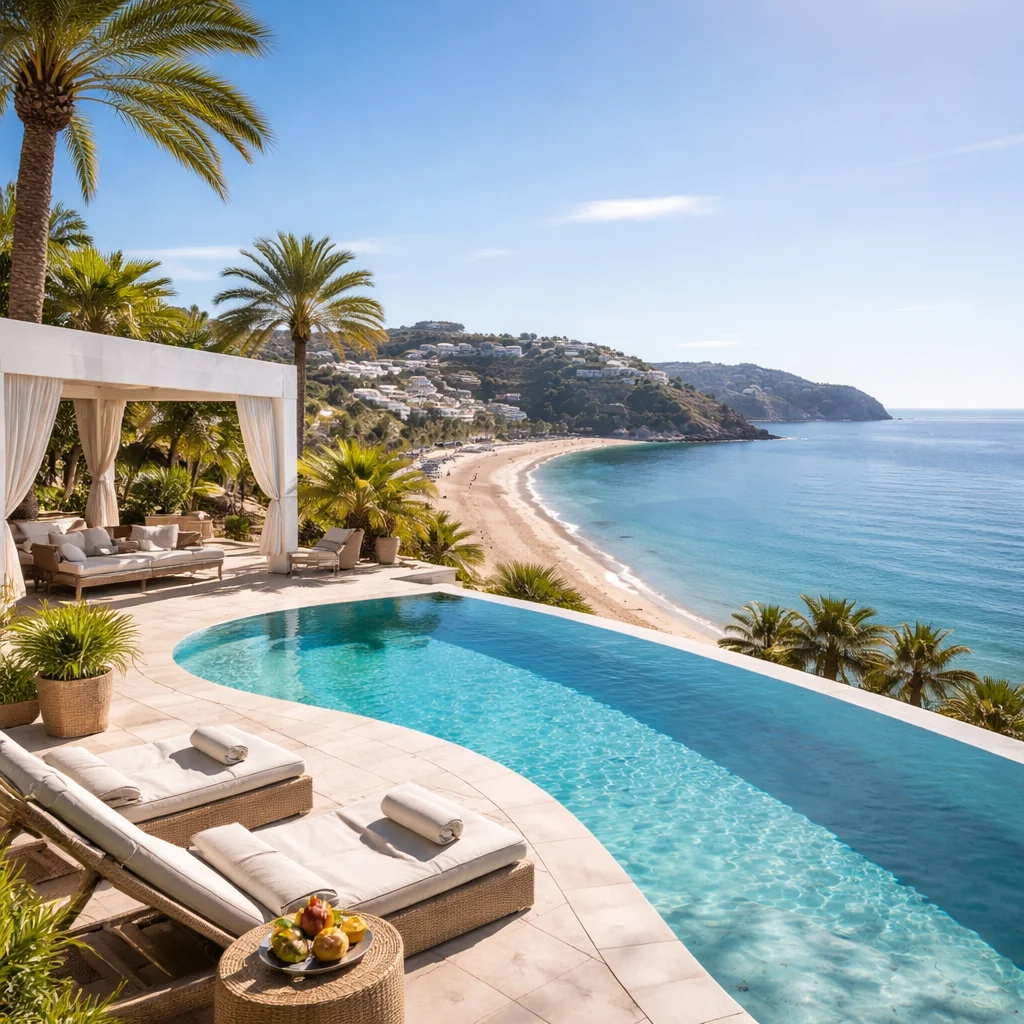
When you arrive at Sea Suite Spain in Almuñécar on the Costa Tropical, you’re not just stepping into a beachfront paradise—you’re entering one of Spain’s most culturally rich regions. The Costa del Sol, stretching across the Málaga province, represents centuries of artistic expression and architectural evolution that tells the story of Andalusia itself. From Moorish fortresses to contemporary art installations, this coastline is a living museum where every corner reveals layers of human creativity and cultural heritage.
The Moorish Legacy: Where History Meets Artistry
The most distinctive architectural feature of the Costa del Sol stems from its Moorish past, a period lasting nearly eight centuries (711-1492 AD). This Islamic influence fundamentally shaped the region’s aesthetic identity, and visitors staying in our beachfront apartments can explore these magnificent remnants throughout their journey.
The Alcazaba of Málaga, constructed in the 11th century during the Nasrid dynasty, stands as one of Spain’s most impressive Moorish fortifications. This fortress-palace complex features intricate geometric patterns, decorative tilework, and sophisticated water management systems that reflect Islamic architectural principles. According to historical records from the Málaga Tourism Board (2024), approximately 200,000 visitors annually explore this monument, drawn by its archaeological significance and panoramic views of the Mediterranean.
Just along the coast, the Castle of Maro in Nerja, dating back to the 16th century, showcases the transition between Moorish and Christian architectural styles. The castle’s defensive design—with its strategic watchtowers and fortified walls—reveals how communities adapted to changing political landscapes while maintaining aesthetic sophistication.
The Caves of Nerja, discovered in 1959, contain prehistoric paintings dating back approximately 42,000 years, making them among Europe’s oldest artistic expressions. The stalactite formations themselves have inspired contemporary artists, and the caves now host an annual festival featuring classical music and modern performances, creating a dialogue between ancient and contemporary art forms.
Renaissance and Baroque Splendor
As you travel eastward from Almuñécar toward Málaga, the architectural narrative shifts to reflect the Renaissance and Baroque periods (16th-18th centuries). The Cathedral of Málaga, begun in 1528 and completed in 1782, represents this extended artistic evolution. Its distinctive asymmetrical façade—missing one of its twin towers due to financial constraints—has become an iconic symbol of the city. The interior showcases 120 meters of soaring columns, intricate choir stalls carved from walnut wood, and a collection of religious artwork spanning multiple centuries.
The Alcazaba’s Palace section contains Renaissance elements incorporated during the Christian period, demonstrating how successive cultures layered their artistic visions atop previous civilizations. The palace’s Nasrid courtyards, with their reflecting pools and arabesque decorations, were preserved and celebrated rather than demolished—a testament to the region’s complex cultural identity.
Museums and Contemporary Art Spaces
The Costa del Sol has transformed into a contemporary art destination in recent decades. The Picasso Museum in Málaga, established in 2003, houses the world’s second-largest collection of Pablo Picasso’s works, with over 285 paintings, sculptures, and drawings. Picasso, born in Málaga in 1881, is intrinsically connected to the region’s artistic identity. The museum occupies the 16th-century Palacio de Buenavista, itself an architectural masterpiece featuring Renaissance design elements.
According to data from the Junta de Andalucía (2024), the Picasso Museum attracts approximately 600,000 visitors annually, making it one of Spain’s most visited art institutions. For guests staying at our beachfront apartments in Almuñécar, this represents an ideal day trip, with the museum located just 40 kilometers away.
The Carmen Thyssen Museum, also in Málaga and opened in 2011, focuses on 19th and early 20th-century Spanish art. Its collection includes works by Francisco Goya, Joaquín Sorolla, and other masters who captured Andalusian landscapes and culture. The museum itself occupies a beautifully restored 16th-century palace, demonstrating how contemporary art institutions can honor historical architecture.
Contemporary art galleries have proliferated throughout the region. The Málaga Contemporary Art Museum (CAC Málaga), inaugurated in 2003, showcases modern and contemporary works in a converted 16th-century customs house. This transformation symbolizes how the Costa del Sol embraces artistic innovation while respecting its heritage.
Architectural Innovation and Urban Planning
Beyond museums and historical monuments, the Costa del Sol’s architecture reflects modern design principles. The beachfront developments, including properties like Sea Suite Spain where our guests experience Mediterranean living, represent contemporary architectural thinking that prioritizes both functionality and aesthetic harmony with natural surroundings.
The Port of Málaga, redesigned and expanded between 2010-2015, combines modern maritime infrastructure with public art installations and architectural landmarks. The port’s transformation created gathering spaces that integrate contemporary sculpture, waterfront promenades, and cultural venues—demonstrating how modern cities can balance commercial needs with artistic expression.
The Museum of Glass and Crystal in Málaga, housed in a 19th-century palace, displays both historical glasswork and contemporary pieces. Its architecture showcases the evolution from neoclassical design to modern restoration techniques, with architects carefully preserving original elements while creating climate-controlled exhibition spaces.
Street Art and Cultural Expression
Walking through towns like Almuñécar and surrounding communities, you’ll discover vibrant street art that reflects contemporary Andalusian identity. Murals depicting local traditions, maritime heritage, and social themes cover building facades throughout the region. This grassroots artistic movement has gained recognition, with several towns officially commissioning street artists to create public works.
The Málaga Street Art Project, initiated around 2012, transformed the city into an open-air gallery. According to local cultural organizations (2024), over 150 large-scale murals now exist throughout the metropolitan area, with artists from Spain and internationally contributing to this evolving landscape. These works often reference Málaga’s Moorish heritage, maritime history, and contemporary social issues.
Vernacular Architecture: The True Soul of the Region
While grand monuments capture attention, the vernacular architecture of coastal villages reveals authentic Andalusian culture. The traditional white-washed houses (casas blancas) with their thick walls, small windows, and interior courtyards reflect centuries of adaptation to Mediterranean climate and lifestyle.
These architectural features—developed during Moorish times and perpetuated through centuries—serve practical purposes: thick walls maintain cool interior temperatures, small windows minimize heat gain, and interior courtyards provide private green spaces and natural light. Contemporary architects designing beachfront properties like Sea Suite Spain often incorporate these principles, creating modern spaces that respect traditional wisdom.
The narrow winding streets of old town areas in Almuñécar, Nerja, and other coastal communities weren’t arbitrary—they were designed for defense, shade provision, and community interaction. Walking these streets, you experience architecture as lived culture rather than museum pieces.
The Artistic Spirit of Our Guests’ Experience
Our clients at Sea Suite Spain frequently express how the region’s artistic heritage enriches their vacation experience. Guests often combine beach relaxation with cultural exploration, visiting museums in the morning and enjoying Mediterranean sunsets from our beachfront apartments in the evening. Many report that understanding the architectural and artistic context deepens their appreciation for the landscape itself—the mountains, coastline, and natural beauty become more meaningful when viewed through the lens of human creativity and cultural history.
The region’s artistic traditions extend to gastronomy, with local restaurants presenting dishes as carefully composed as paintings. Coastal seafood preparations reflect centuries of culinary innovation, combining Moorish spice traditions with Mediterranean ingredients—another dimension of the region’s artistic expression.
Planning Your Art and Architecture Journey
Visiting the Costa del Sol’s artistic and architectural treasures requires strategic planning. The Málaga Art Passport (available as of 2024) provides discounted admission to multiple museums and monuments. Most major sites are accessible via the regional train system (Renfe) connecting Almuñécar to Málaga within 60 minutes.
For optimal experience, allocate at least three days to explore major museums and monuments, though two weeks would barely scratch the surface of cultural offerings. Spring (March-May) and fall (September-November) provide ideal weather for walking tours of historic town centers, as summer temperatures exceed 30°C (86°F).
Our beachfront location in Almuñécar positions you perfectly for exploring both the western Costa del Sol (toward Málaga) and the eastern Costa Tropical, with distinct architectural characteristics in each direction. To the west lies urban development and major museums; to the east, smaller towns preserve more traditional vernacular architecture.
Conclusion: Art as a Living Tradition
The art and architecture of the Costa del Sol transcends historical categorization—it remains a living, evolving tradition. Contemporary artists build upon Moorish geometric principles; modern architects respect vernacular design wisdom; and communities continue creating public art that reflects current cultural identity.
When you stay at Sea Suite Spain, you’re not merely accessing a beachfront property; you’re positioning yourself within a landscape shaped by thousands of years of artistic expression. The Mediterranean views from our apartments frame a coastline that has inspired countless artists, from medieval Moorish craftsmen to contemporary painters. Every architectural detail surrounding you—from the whitewashed walls of neighboring buildings to the geometric patterns in local tilework—connects you to this rich heritage.
The Costa del Sol invites you to experience art and architecture not as museum exhibits, but as the living context of Mediterranean life, where creativity, culture, and natural beauty remain inseparably intertwined.
References and Bibliography
Junta de Andalucía. (2024). Estadísticas de Visitantes de Museos de Andalucía. Regional Tourism Authority.
Málaga Tourism Board. (2024). Historical Monuments and Archaeological Sites: Visitor Statistics 2024. Official Tourism Portal.
Spanish Ministry of Culture. (2024). National Heritage Sites: Costa del Sol Region. Ministry of Culture and Sports.
Unesco World Heritage Centre. (2024). Alhambra, Generalife and Albayzín: Granada. Retrieved from https://whc.unesco.org/
Museo Picasso Málaga. (2024). Collection Database and Visitor Information. Official Museum Website.
Centro de Arte Contemporáneo de Málaga. (2024). Contemporary Art Collections and Exhibition Schedule. CAC Málaga Official Portal.